
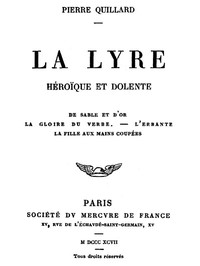
La lyre héroïque et dolente by Pierre Quillard
Pierre Quillard was a French Symbolist poet, and 'La lyre héroïque et dolente' (published in 1897) is a fascinating snapshot of his mind. The Symbolists were all about suggestion, dreams, and escaping plain reality. But Quillard adds his own twist.
The Story
There isn't a single narrative plot. Think of it more as a journey through a mood. The book is a collection of poems that swing between two poles. On one side, you have the 'heroic'—poems that reach for classical themes, ancient legends, and a sense of noble, almost lost, grandeur. They might evoke knights, distant battles, or pure artistic beauty. On the other side is the 'dolente' or sorrowful—poems steeped in a very modern sense of weariness, isolation, and doubt. This is the voice of someone watching the 19th century charge toward industry and cynicism. The 'story' is the quiet battle between these two feelings. Can the old ideals survive? Or are they just beautiful ghosts?
Why You Should Read It
I'll be honest, some of the classical references went over my head. But that's not the point. The power is in the feeling. Reading Quillard is like listening to a very thoughtful, slightly sad friend talk about the world. You feel his longing for something more meaningful than the daily grind. His poems about beauty aren't just descriptions; they're acts of resistance. In a world getting louder and faster, he insists on paying attention to a perfect line of verse or a fleeting moment of peace. It's not depressing; it's honest. He gives a name to that quiet ache for a more heroic life, which I think we all feel sometimes.
Final Verdict
This book is perfect for readers who love poetry that feels both timeless and personal. If you've enjoyed the wistful beauty of Verlaine or the dreamy quality of early Yeats, you'll find a friend in Quillard. It's also great for history-minded folks curious about the fin-de-siècle spirit—that specific blend of hope and anxiety at the end of the 1800s. Don't rush it. Read a poem or two at a time, maybe with a cup of tea, and let the dual music of his 'lyre' sink in. It's a small, elegant protest against forgetting the sublime.
The copyright for this book has expired, making it public property. It is now common property for all to enjoy.
Charles Hernandez
9 months agoI was skeptical at first, but it challenges the reader's perspective in an intellectual way. One of the best books I've read this year.
Karen Garcia
5 months agoBased on the summary, I decided to read it and the clarity of the writing makes this accessible. Highly recommended.
Joshua Torres
1 year agoI started reading out of curiosity and it provides a comprehensive overview perfect for everyone. A true masterpiece.
Sandra Davis
3 months agoIf you enjoy this genre, the emotional weight of the story is balanced perfectly. Highly recommended.

Ashley Clark
1 week agoThis is one of those stories where the arguments are well-supported by credible references. A valuable addition to my collection.