
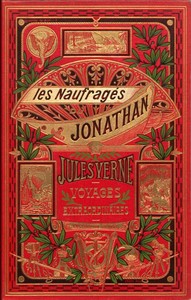
Les naufragés du Jonathan by Jules Verne
Jules Verne is famous for wild adventures, but 'Les naufragés du Jonathan' is a different kind of journey. It's a deep, thoughtful look at society, and it starts with a simple premise that gets incredibly complicated.
The Story
The novel follows Kaw-djer, a mysterious European who believes passionately in absolute human freedom and hates all forms of government. He's living in isolation in the Tierra del Fuego archipelago when fate intervenes. A ship called the Jonathan is wrecked, and he helps lead over a hundred survivors to safety on a nearby island, Hoste Island.
With no hope of immediate rescue, the group must build a new society from scratch. Kaw-djer seizes this as the perfect chance to put his anarchist ideals into practice. He declares there will be no leaders, no laws, and no private property—just pure liberty and mutual aid. At first, it works. People cooperate, share resources, and build shelters.
But as time goes on and rescue seems less likely, the cracks appear. Without any rules, the strong begin to take advantage of the weak. Greed, laziness, and conflict break out. The community's survival is threatened not by the elements, but by its own members. Kaw-djer is forced to watch his perfect free society crumble, and he faces an impossible choice: stick to his principles and let everyone perish, or become the very thing he despises—a ruler who imposes order.
Why You Should Read It
This book surprised me. It's not a typical Verne rollercoaster; it's a slow-burn character study of a whole community. The tension doesn't come from action scenes, but from watching a beautiful idea get tested. You see every small compromise, every act of selfishness that pulls the group apart. Kaw-djer is a fascinating, tragic figure. His internal struggle is the heart of the story. Is he a hero or a fool? The book doesn't give easy answers.
It’s really about asking hard questions. What do we actually need to live together peacefully? Is complete freedom even possible in a society? Verne doesn't preach; he just shows you what might happen, and it feels uncomfortably real.
Final Verdict
This is a book for thinkers and for readers who enjoy classic literature that tackles big ideas. If you love 'Lord of the Flies' but wish it had more political philosophy, this is your jam. It's also perfect for Verne fans ready to see a different side of him—one less concerned with machines and more with the mechanics of human nature. Don't pick it up for a light adventure. Pick it up for a compelling, sobering look at what it means to build a world from nothing.
This historical work is free of copyright protections. Access is open to everyone around the world.





Carol Nguyen
1 month agoI came across this while browsing and it provides a comprehensive overview perfect for everyone. I learned so much from this.